Defender on Linux in Practice
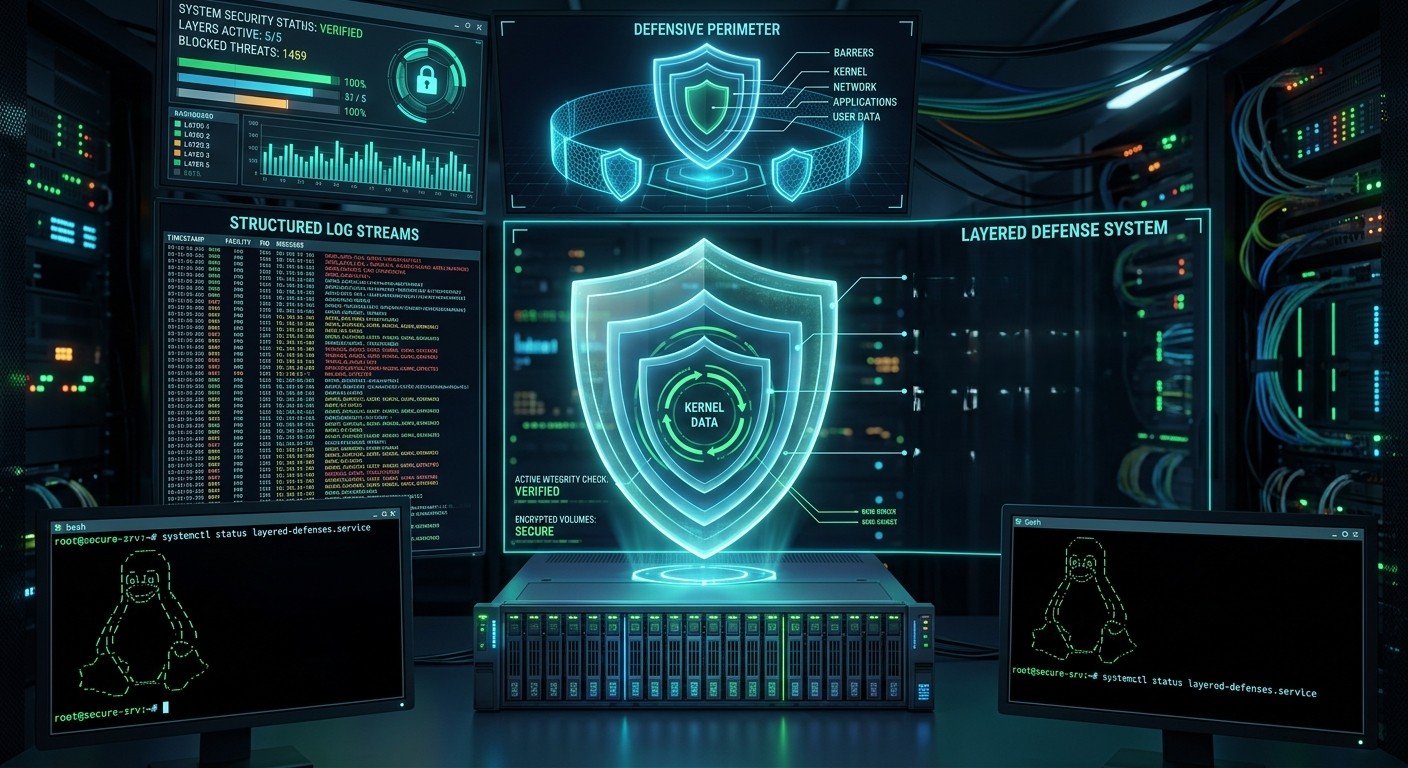
Linux has always had a certain mythology around it.
Part of that mythology says that Linux is somehow above the kinds of endpoint protection conversations that Windows has had for years. Some of that came from the old days, when Linux was less visible, less common in enterprise estates, and less frequently treated as a first-class target by the kinds of attackers who now seem happy to go wherever the opportunity is. Some of it came from a kind of cultural instinct: if the system is well built and well run, then antivirus feels like an admission of weakness, or at least unnecessary compromise.
I understand where that instinct comes from. I also think the world has moved on.
Linux now sits underneath too much of modern infrastructure for that old confidence to go unchallenged. Servers, cloud workloads, containers, edge systems - so much of what matters now depends on Linux. And attackers know that. Rootkits, cryptominers, ransomware, and supply chain compromises are not theoretical concerns anymore. They are part of the environment. That changes the conversation.
In that context, Microsoft Defender for Endpoint on Linux becomes worth taking seriously.
That does not mean it is perfect. It does not mean it is simple. And it definitely does not mean it is something you should install and then forget about. But it does mean it deserves a more thoughtful assessment than either reflexive trust or reflexive dismissal.
What I have seen so far is this: Defender on Linux can be useful, but the reality is more uneven than people often expect.
The promise is easy enough to understand. Real-time protection on Linux gives you another layer in a broader security posture. It gives you local detection, central visibility, and a bridge into a wider Defender ecosystem that many organisations are already invested in. On paper, that is attractive. And in many environments, real-time protection does in fact work. It runs. It detects. It contributes something real.
The problem begins when people mistake that for the end of the story.
Protection is valuable, but it is not fire-and-forget. It still needs ownership, tuning, verification, and some real thought around logging and operations. Like so much in infrastructure, the existence of a service does not automatically mean the existence of trust.
That becomes especially obvious when quick scans enter the picture.
A lot of people arrive at Linux with a Windows-shaped expectation. A quick scan should be quick. It should target key areas, finish promptly, and give you a predictable routine control that can be scheduled without much drama. That is a reasonable assumption. It just does not consistently match what happens in practice.
What I have seen is that Linux systems tend to fall into a few broad patterns.
A small number of hosts behave more or less the way you would hope. Quick scans complete promptly and do not attract much attention. Those systems feel reassuring, mostly because they fit the story you expected to be true.
Then there is a larger group that behaves very differently. Quick scans still complete, but they scan far more than expected and can run for hours. Not “a bit longer than planned” hours. Real, disruptive, awkwardly long hours. Long enough that the word “quick” begins to feel almost sarcastic.
And then there is the most uncomfortable category: systems that scan for a long time, six hours or more in some cases, and then terminate. Not cleanly. Not helpfully. Just enough to leave you asking what exactly happened, and whether the logs are going to tell you anything useful about it.
That is the part that matters most.
Slow scans are irritating. Inconsistent scans are difficult. But the real danger is silent or half-silent failure. If a scan behaves strangely, terminates badly, or produces logs that are sparse or structurally messy, then the risk is not merely inconvenience. The risk is misplaced confidence. A system can look protected on paper while quietly failing in a way that nobody notices quickly enough.
That is why I think the biggest issue here is not performance, but trust.
Quick scans on Linux are not something I would treat as naturally dependable just because the feature exists. The concept makes sense. The implementation may even work beautifully on some systems. But the variation across real hosts means you have to verify the behavior, not assume it.
That lesson expands outward.
The more I think about Defender on Linux, the less I think the interesting question is “does it run?” and the more I think the important question is “how observable is its failure?” Protection is not just about what happens when everything behaves normally. Protection is also about what happens when something behaves badly, incompletely, or opaquely.
That is where logging becomes critical, and where Linux deployments can become frustrating.
If the output is stream-based, loosely structured, or awkward to centralize, then the human work around the tool increases quickly. And if that human work is not done, then the telemetry exists in theory more than in practice. Logs that cannot be searched, correlated, or trusted are often only a little better than no logs at all.
So if I were giving practical advice to a team considering Defender on Linux, it would be fairly simple.
Do not treat it as a checkbox. Treat it like an operational system that needs care.
Give it clear ownership. Make sure someone is actually responsible for whether scans complete, whether abnormal behavior is noticed, and whether failures are understood. Build health checks around the service. If you are going to schedule scans, make sure you are also checking that those scans truly ran and ended the way you think they did.
A timer alone is not a control. Evidence is a control.
I would also be careful not to mistake Defender for a substitute for Linux security discipline more broadly. Hardening still matters. Patching still matters. Container security still matters. Incident response still matters. Defender can become a meaningful layer in a defense-in-depth strategy, but it is still a layer. Nothing more. Nothing less.
That is probably the fairest way to frame it.
Defender on Linux is not useless. It is not a gimmick. It is not automatically wrong just because it comes from a Windows-shaped ecosystem. But it also is not self-authenticating. You do not get to trust it just because you installed it. You trust it by watching it work, by understanding how it fails, and by building enough operational structure around it that the quiet failures are not allowed to remain quiet.
In the end, that may be the most important lesson of all.
The real risk is not the absence of protection. The real risk is the illusion of protection.
Defender on Linux can add value. But only if you are willing to verify that the value is really there.